Crystal Water Bottles: The Stones That Should Never Touch Your Drink
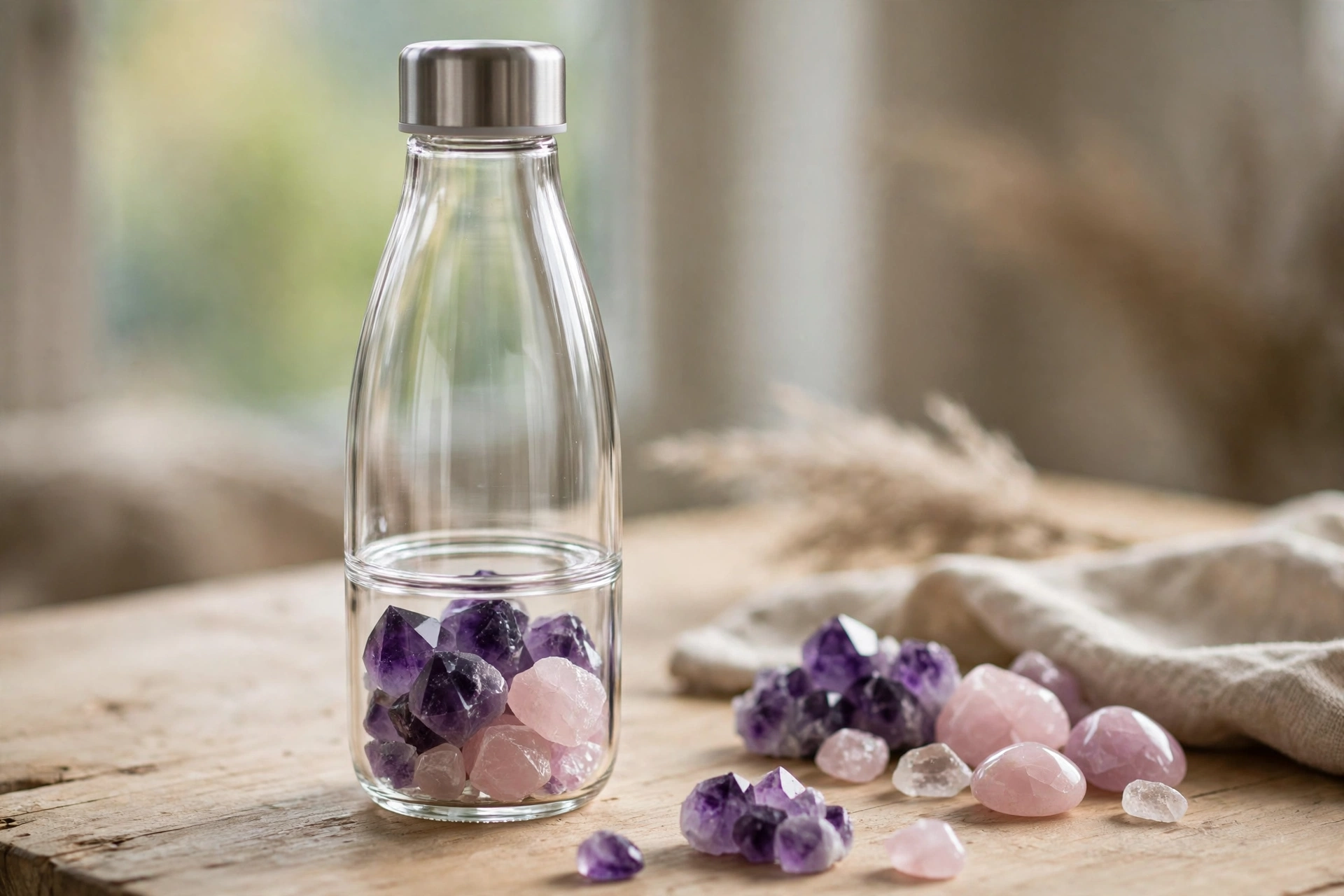
Crystal water bottles - a quartz point sitting in your drinking water, "infusing" it - sell by the millions. The marketing shows serene stones; the mineralogy is less serene. Some of the most popular crystals in the wellness world are ore minerals that release genuinely toxic elements into water. Nobody selling the bottles prints this list. Here it is.
Never in drinking water
- Malachite - copper carbonate. Releases copper ions into water; copper at elevated levels causes nausea and, in quantity, liver damage. Collector guidance is absolute: never make elixirs with it.
- Azurite - another copper carbonate, porous and faster-leaching than malachite. Same verdict.
- Cinnabar - mercury sulfide. Mercury. In a beverage bottle. No.
- Galena - the primary ore of lead. Submerging it risks lead leaching, and lead has no safe exposure level.
- Realgar - arsenic sulfide. Highly toxic, full stop.
- Pyrite - iron sulfide: with water and oxygen it oxidizes, producing rust and sulfuric acid. Your "charged" water trends acidic and metallic.
- Lapis lazuli - not one mineral but a rock containing pyrite and calcite; the inclusions degrade and react in water.
- Fluorite - soft calcium fluoride; scratches, pits and clouds in water, and belongs nowhere near a drink.
- Selenite - gypsum: it doesn't poison the water, it dissolves into it, ruining stone and water together.
- Lepidolite and hematite - a flaky lithium mica that delaminates, and an iron oxide that simply rusts.
Generally considered inert
The quartz family - clear quartz, rose quartz, amethyst - is what the crystal industry itself recommends for water contact: Mohs hardness 7, chemically stable silicon dioxide, insoluble. Even here: wash the stone (it has been handled, warehoused and shipped), prefer polished over raw specimens (fewer pores for bacteria), and treat cracked or dyed stones as unknowns - a dyed stone's coating is nobody's food ingredient.
The method that removes the question
Practitioners call it the indirect method: the crystal sits in a sealed glass chamber, or outside the vessel entirely, never touching the water. Better bottle designs do exactly this. If the ritual matters to you, indirect infusion delivers 100% of the ritual and 0% of the mineral leaching - the rare wellness compromise with no downside at all.
And what does the crystal add?
Honestly assessed: for a chemically inert stone like quartz, nothing measurable - silicon dioxide does not dissolve, so the water after a quartz soak is, to any instrument, the water you poured. Whatever benefit crystal water brings is ritual and intention, and people are entitled to enjoy both. The safety issue is only ever the chemistry: a handful of beautiful minerals are, in water, a dosing mechanism for heavy metals. Keep those dry, use the indirect method for everything else, and start with filtered water so the one thing provably in your glass is the water itself.
More curious water questions
- Should You Add Psilocybin Mushrooms to Your Water?
- Can Any Water Cure (or Kill) Cancer? Every Claim, Graded
- The Safest Ways to Color Water for Kids: Silly, Fun and Actually Drinkable
- How to Make Water Glow in the Dark (the Safe, Drinkable Way)
- Moon Water: What's Real, What's Ritual - and How to Make It Safely
Start with water you can verify
Curiosity handled, the everyday question remains what's in your tap. Two minutes with the Filter Finder turns it into a graded shortlist.