The Safest Ways to Color Water for Kids: Silly, Fun and Actually Drinkable
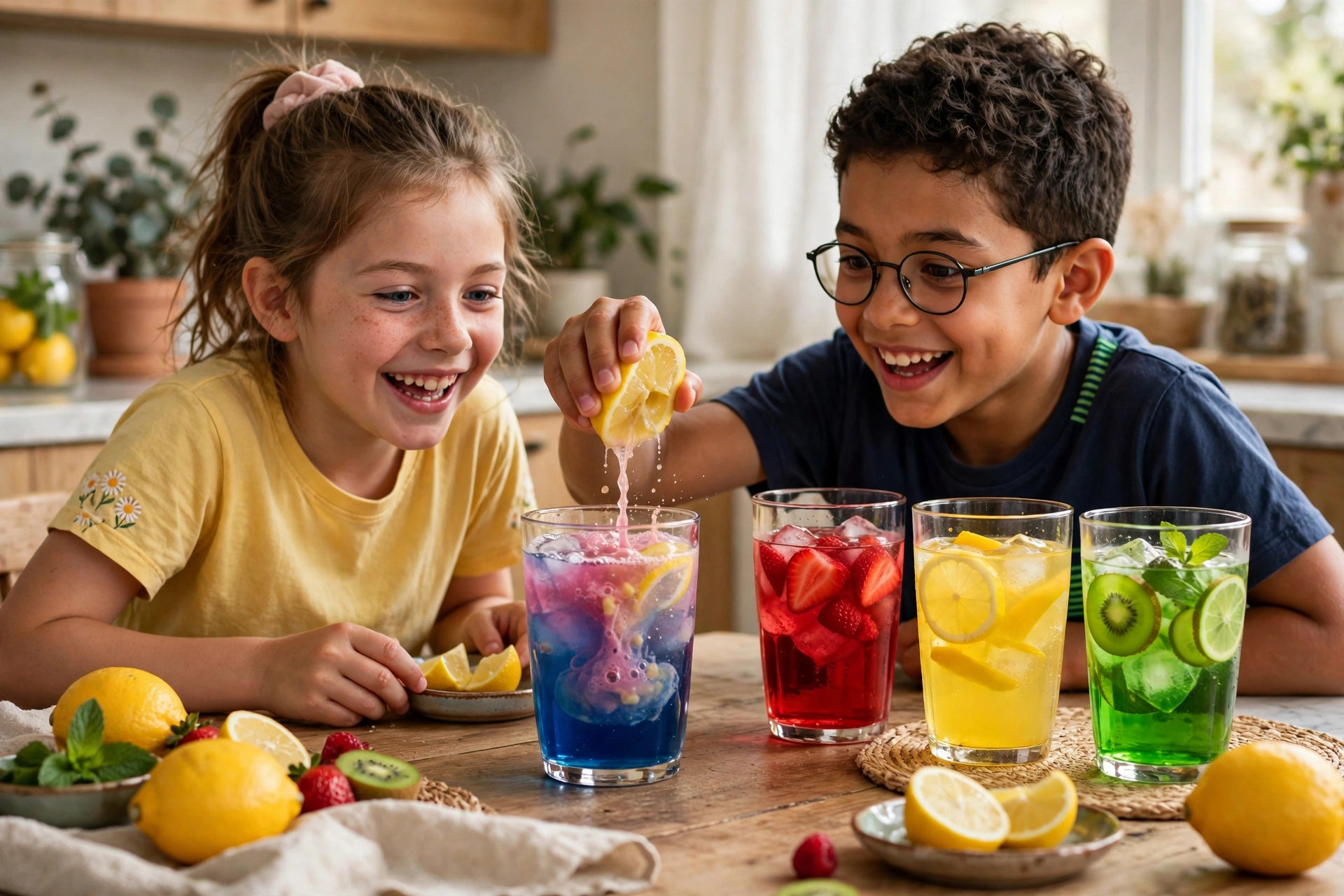
Kids drink more water when it's purple. That's not a study, that's parenting. The question is what the purple is made of - because "non-toxic" on a craft label does not mean edible, and some of the prettiest options in the pantry are also the safest.
The one rule
Only food-grade color goes in a drink. Craft dyes, tie-dye kits, watercolor paints and craft glitter are formulated for paper, not stomachs, whatever their "non-toxic" labels say - that label means "not acutely poisonous in craft accidents," not "approved as food." Even glitter needs care: only buy products explicitly labelled edible or food-grade; decorative cake glitters that say "non-toxic" are often plastic and meant to be removed before eating.
The natural champions (with a magic trick)
- Butterfly pea flower - the star. Steeped in hot water it turns a deep, jewel blue, caffeine-free and nearly flavorless. Its pigments (anthocyanins) are natural pH indicators: squeeze in lemon juice and the glass turns purple, then pink, in front of the kids. It is a drink and a science lesson in one pour, and the closest thing to a safe "potion" that exists.
- Hibiscus - ruby red, tart like cranberry, and it also shifts shade with citrus.
- Beet juice - a few drops make honest pink; more makes magenta. Earthy if you overdo it, so dose by drops.
- Turmeric - sunshine yellow for "golden water." Wonderful color, enthusiastic stainer of clothes, counters and teeth-adjacent items. Aprons on.
- Spirulina / blue spirulina - sea-green to blue, the smoothie-shop color. Mild flavor at coloring doses.
- Purple cabbage water - the classroom classic: blue-purple that swings pink with acid and green with a pinch of baking soda (a pinch only - it tastes soapy fast).
What about regular food coloring?
The FD&C colors in the grocery baking aisle (Red 40, Yellow 5, Blue 1 and friends) are FDA-permitted for food, with every batch certified - they are, by regulatory definition, food-safe at the tiny doses used in drinks. The honest debate around them is behavioral, not toxicological: a 2007 UK study (the "Southampton" study) linked certain color mixtures with increased hyperactivity in some children, which is why EU products carrying those colors bear a warning label, while the FDA reviewed the same evidence and kept them permitted. Many parents split the difference: naturals at home, no panic about a red sports drink at a birthday party. Our only firm line is dose - colors are for tinting water by the drop, not for making drinks that stain tongues for sport. Okay, maybe a little tongue-staining. It's the point, after all.
Three builds that never fail
- Magic lemonade: a pitcher of butterfly pea tea over ice; kids squeeze their own lemon wedges and watch blue become pink.
- Rainbow ice: freeze layers of hibiscus (red), turmeric water (yellow) and pea tea (blue) in one tray; serve in sparkling water and let the melt mix the colors.
- Potion bar: small cups of the natural colors above, plain filtered water, droppers. Mixing is the activity; drinking the result is the clean-up.
And the water itself
All of this works better - brighter colors, cleaner flavors - starting from filtered water, since chlorine taste fights delicate natural colors. Filtered first, silly second: the same rule as everything on this site. For the grown-up version of colored water, see Make Water Exciting.
More curious water questions
- Should You Add Psilocybin Mushrooms to Your Water?
- Can Any Water Cure (or Kill) Cancer? Every Claim, Graded
- How to Make Water Glow in the Dark (the Safe, Drinkable Way)
- Moon Water: What's Real, What's Ritual - and How to Make It Safely
- Crystal Water Bottles: The Stones That Should Never Touch Your Drink
Start with water you can verify
Curiosity handled, the everyday question remains what's in your tap. Two minutes with the Filter Finder turns it into a graded shortlist.